
Trust Before Effort

is an AI platform for content creation and management, built in a fast-moving startup environment.
As the sole product designer, I worked closely with the founder, product manager, and developers, shaping the product from an early technical prototype into an evolving end-to-end experience.
80% of Users Dropped Off Before Experiencing the Product
Noovox is an AI platform for content creation and management.
Early on, we discovered that nearly 80% of users abandoned onboarding when asked to connect their LinkedIn account — before they had experienced any value from the product.
The connection gave the AI valuable context. But from the user's perspective, we were asking for something significant before giving them a reason to trust us.

The AI needed more context.
The user needed a reason to give it.
Guiding principle
We started treating every request from the user as something the product had to earn.
USER GIVES
Information
Permissions
Choices
Effort
PRODUCT GIVES
Relevance
Control
Useful output
Value
How the Principle Shaped the Product
Three decisions that changed when, how, and what we asked from users.
01
Earn the Permission
Don't ask for trust before demonstrating value.
LinkedIn gave the AI valuable context, but asking users to connect it before experiencing the product created friction too early.
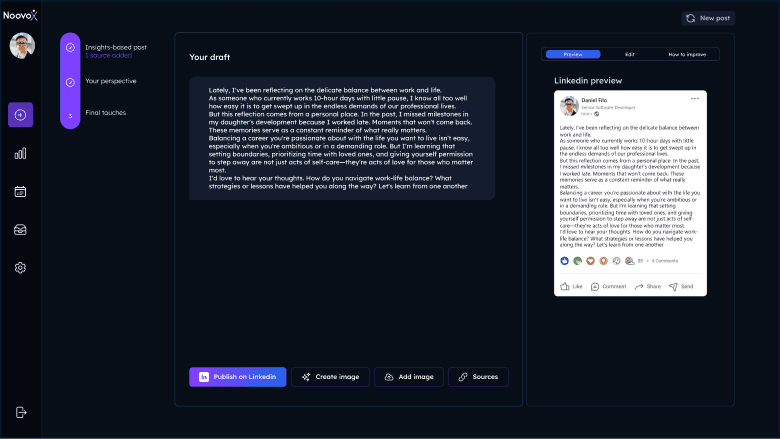
We moved the connection later in onboarding, made it optional, and followed it with personalized topics that demonstrated the value of the information users shared.
Connect LinkedIn
Questions
Product

02
Remove Interaction Without a Job
When "Cool" Wasn't a Good Enough Reason
Noovox included a chat interface because it felt expected in an AI product. But it required users to formulate and refine prompts without creating enough additional value.
We removed it and shifted toward proactive suggestions based on context the product already had.
Before
“Cool” Chat

After
If an interaction doesn't reduce effort or improve the outcome, it doesn't earn its place.
03
Delay Choice Until It Matters
Content first. Style second.
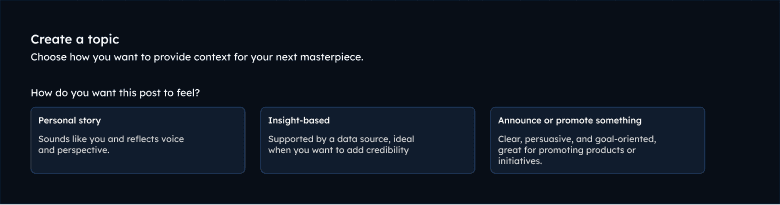
Creating content originally meant choosing between 49 combinations of writing personas and structures before users had even defined what they wanted to say.
We reversed the order: users start with their idea, then choose from three meaningful styles once that choice has context.
49 options became 3 — but the bigger change was deciding later.
Before
49 Options

After
3 Options
Every request for effort had to earn its place.
One Product. Three Ways of Building It
Working as the sole designer meant adapting the design process to each developer.
Developer 01
AI-built frontend
I wrote UI prompts.
Developer 02
Independent implementation
I built the design system
Developer 03
Collaborative sessions
We worked through components together
The implementation process changed. The product principles didn't.
What I Took Away
I started this project thinking good AI UX was about giving the model enough context.
I left understanding that every request for information, choice, or interaction has a cost for the user.